Friday, 6 September 2013

Review: Ormonde Jayne, Ormonde Woman - The Witch's Brew


Have you ever contemplated a link between perfumery and witchcraft? I presume it depends upon what your perception of witchcraft actually is/was. I’ve long held a fascination with the concept of ‘the witch’, indeed hailing from Lancashire, my county was famed for the notorious Pendle witch trials in the early 1600s.

A rather romantic depiction of the witches of Macbeth

Witchcraft was feared as an unholy power, an ability to charm something/someone, enabling it to flourish or to wither, or to cast some personal wish. This was thought to be achieved by some sort of devilish incantation, the aid of a ‘familiar’ (often an animal spirit form such as the ubiquitous black cat) or the use of a magic potion formed from all manner of herbs and voodoo-esque ephemera.

Ancient medicine relied upon the potent power of herbaceous plants to aid recovery. Nicolas Culpeper’s ‘Complete Herbal’ of 1653 gave ordinary folk advice about how to treat common illnesses with easily foraged indigenous plants, a practice that had been going on for many hundreds of years before the book was published. In the Complete Herbal, in addition to treating physical ailments, plants were also recommended to treat ailments of the mind or soul, much in the same way as they are used in contemporary aromatherapy and psycho-aromatic perfumery. Next time you spritz Penhaligon’s Lavandula consider Culpeper’s advice upon the lovely herb:

Two spoonfuls of the distilled water of the flowers taken, helps them that have lost their voice, as also the tremblings and passions of the heart, and faintings and swooning, not only being drank, but applied to the temples, or nostrils to be smelled unto”

So it doesn’t just smell nice, it can also sort out untimely swoons and histrionics in the presence of your beau.

Equally, as plants could be used to heal, they could also be used to bring about demise. With no such thing as forensic science, a down trodden and abused wife could be rid of her violent husband with the careful administration of a poison over time, “Belladonna apple pie my love?”

Frequently it was the job of a woman to act as the village healer, midwife and general wise sage to whom others could turn to for help. It’s no wonder that during the religious confusion and superstition of the middle ages, she could be thought of as ‘against god’ in that she held the power to give or take life. As Europe was transformed into a superstitious and religiously vehement place during the Protestant Reformation of the 1500s, the practices of a healer would no doubt be under scrutiny as devilish activity.   

My own maternal grandmother would have no doubt been tried as a witch with her use of folklore remedies. My mother’s coughs and colds were kept as secret as possible as my grandmother’s primary remedy for this ailment was to wrap her chest in brown paper smeared in goose fat, a grim cure. In her cellar brewed great vats of wines, dubiously created from anything, be it elderflowers or potato peelings. Containing curious detritus and cloudings they were possibly as poisonous as they were intoxicating!

Witches were thought to be able to create a potion, a substance capable of bewitching a person to an ultimate aim such as making them fall in love becoming fevered with amorous intention.  Dsquared borrowed this idea to market their line of ‘Potion’ fragrances, suggesting that the wearer become infallibly attractive as if under a spell. Dior of course utilized the idea of a witchy liquid in the creation of ‘Poison’, hinting at the notion of a dangerous seduction, the dark power of a woman. The apple shaped bottle recalls the poisoned apple that bewitched Snow White, the curse of a jealous vengeful hag. It’s glass was of a deep amethyst, a colour associated with spirituality.


Those who’ve read Patrick Suskind’s fictitious novel ‘Perfume’ will remember the protagonist Grenouille’s grand feat of magic as he seduced the crowd of bloodthirsty folk assembled to witness his execution. With an application of his masterpiece perfume (created from the skin secretions of beautiful young girls), he turned himself from murderer to angel, bewitching those who sought his death into a writhing mass orgy of heaven sent love. 

Which brings me to my favourite fragrant witch’s brew, Ormonde Jayne’s Ormonde Woman.
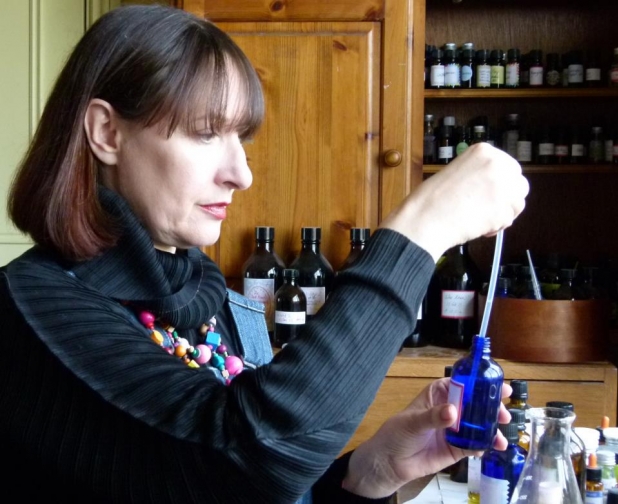
Linda Pilkington, Creative Director of the Ormonde Jayne line looks nothing like a fairy tale witch, with her expensively tailored clothes, bright eyes and lush mane of hair, she is a far cry from a hooked nosed hag. However, as a creator of potions she is a fine witch indeed.

Ormonde Woman, is a forest scent, loaded with earthly pleasures. It is reminiscent of being deep in the woods where the sticky saps and resins come forth from trees and bushes to grace the air with a pagan whiff. The dominant note here is grass, softened by a magnificently earthy vetiver. Indeed if Ormonde Woman holds the bewitching power of a love potion, the carnal act will most certainly take place outdoors, there are no satin sheets for the witch’s brew. This is ‘knickers full of ferns’ stuff.

A frolick in the woods

Grassy chypres can be a little cold and astringent but this one projects warmth from it’s ambery base, again adding a sensuality to the already heady concoction. We tend to associate a ‘sexy’ fragrance with the inclusion of grand indolic notes of tuberose or jasmine, perhaps amped up by a dose of animalic musk. This is the opposite. Ormonde Woman’s jasmine is barely traceable, in fact I can’t smell it. I imagine it simply serves to round off a little of the astringency of grass. We don’t need flowers, what could be more arousing than the smell of the forest, where all manner of life abounds in the flourishing vegetation?

The scent is famed for the inclusion of a rare note – black hemlock (or Tsuga). The word hemlock itself connotes witchcraft, as we associate it with ‘poison hemlock’ or Conium maculatum. This herbaceous plant, when ingested in high quantities causes death by paralysis, ultimately leading to respiratory failure, a fine way to see off your accursed enemy! I’d like to see IFRA contend with that one.. Luckily, black hemlock is an entirely different plant, in fact it’s an entirely harmless tree from the conifer family. I couldn’t possibly tell you what it smells like as the woody/grassy notes blend seamlessly into a harmonious brew where nothing ‘pokes out’ as unusual.

So dear readers, what is your opinion? Have you cast a love spell with your fragrance? Or do you use scent to evoke a spiritual meditation? I’d love to hear your thoughts..

If you’ve enjoyed reading this article why not use the ‘subscribe by email’ box on the right hand column to ensure that you never miss a fragrant post. Alternatively, you can hit ‘like’ to receive regular updates at:

https://www.facebook.com/odiferess


Thursday, 29 August 2013

When mainstream rivals niche - The Odiferess guide to a bargain, plus a giveaway!


How much would you consider too much to splurge on a perfume? Are you the proud (or even guilty) possessor of a deck of Clive Christian and Amouage bottles? Or do you hunt with diligence for a good deal?

 Clive Christian No 1 limited edition cost £115'000 per 500 ml and came delivered in a bentley!

Discussions with friends from the online niche fragrance community seem to indicate that we are not affluent. Our habits have largely stemmed from fanatical love rather than the necessity to get rid of a wodge of spare cash. We share the need for a bargain, be it in the form of a used bottle or decant on ebay, a swop with a friend in an online community or a patient wait for a store to have a discount day. I admit to breaking into a genuine hand tremor and heart palpitation upon finding a Keiko Mecheri for £30 in TK Max, such was the climatic thrill of the bargain hunt.

With this in mind I ask you, how long is it since you’ve thoroughly explored the less covetable or more mainstream brands? We are lured by the exoticism of the niche market but we must remember that in addition there are some damn fine fragrances that don’t necessarily require getting into debt for or risking a blind buy due to the exclusivity of niche distribution. So, I give you..

The Odiferess guide to saving money for the niche obsessive or 'stop being daft and pay your rent this month'.

How it works – The cheaper scents listed here are not intended to be a ‘smells like’. They are simply scents that I feel are worth a sniff or that possess a similar atmosphere to their niche counterpart or share many of the same notes. Some of the cheaper scents are still niche or high end designer, included here because they are available at great prices online.

If you like Mancera -Aoud Cafe: Try Gaultier - Kokorico, this massive commercial flop probably occurred because it smells beautifully niche but was marketed to the mainstream. It’s now discontinued but very easy to get hold of and worthy of a blind buy if you like bitter and gourmand notes alongside an oudy whiff. Main discernible notes – coffee, cacao and woods. Projects for miles and lasts forever, not subtle. Guide £15 to £25 online.

If you like Mancera -Roses Greedy or L’Artisan Parfumeur – Traversee du Bosphore: Try Yves Rocher – Rose Absolue, a curious jammy rose with a Turkish delight note, high quality ingredients. Turin and Sanchez like it. I think it’s dreadful, but I can understand it’s allure if you have a quirky gourmand loving nose. Yves Rocher do exceptionally cheap discounts regularly (50%) on their website and give a free gift and samples with every order. Guide £20 ish with the discounts, if there isn’t a discount immediately wait till the following month and there should be one. You could also buy their brilliant bitter almond scented body ‘Nourishing Moisturiser’ at the same time which is extraordinarily lovely when layered with Mitsouko.

If you like Guerlain – Spiritueuse Double Vanille: Try Chopard – Casmir. This is a high end designer scent outside of the UK but for some reason it’s a bargain bucket delight here. Main discernible notes: This has the wonderful balsamic combination of Tonka, Vanilla, Opoponax and Benzoin with a slightly fruity apricot tone on top. It’s notably peculiar but very appealing, particularly when you feel the need for opulence and depth. My 30ml bottle cost me £13 brand new on ebay and is the prettiest in my collection with it’s perky little golden Arabic minaret.

If you like Serge Lutens – Ambre Sultan or Chergui or Dior - Mitzah: Revisit your Estee Lauder counter to smell the enduring classics Youth Dew and Cinnabar. Extraordinarily good quality orientals with killer projection. Likewise remind yourself of YSL – Opium. Opium has been the subject of many a moan about IFRA’s restrictions on clove, cinnamon etc but it still smells immense in it’s current formulation. For a genuine bargain from both of these brands, linger until 3 days after Christmas and acquire a discounted gift set where you’ll benefit from some free body lotion or shower gel.

If you like Tom Ford – Oud Wood or Serge Lutens - Bois de Violette: Try Cartier Essence du Bois. This is essentially a cross between the two scents, a very gentle and somewhat watery oud, citrus and cedar fragrance with a subtle and not overly sweet note of violet (flower and leaf). A thing of wonder for those who find oud notes too sharp and astringent. Although relatively expensive in department stores, it appears on ebay for about £40 for 100ml.

If you like Frederic Malle - Musc Ravageur: Try L’ Erbolario - Meharees (to see my review on Meharees click here). It’s annoyingly hard to get hold of in the UK but much easier in mainland Europe. Price guide: £30 (but import costs from Italy could make it more expensive for UK folk).

If you like (or liked the idea of but actually disliked) Byredo – Pulp: Try Van Cleef & Arples – Oriens. Imagine the striking blackcurrant astringency and sweet praline of Pulp but without the ‘bin juice’ vegetal note that many people could not tolerate in this cult niche and you have Oriens – wearable Pulp. Also worth a sniff could be Mugler’s Womanity – salty Pulp. Both cost around a third of the price Pulp (around £25 to £40) and don’t smell of bins.

And if you’ve ignored the mainstream department store counters lately, revisit: Chanel – Pour Monsieur, Dior – Eau Sauvage and Lancome – O de Lancome for beautiful lemony oakmoss chypres. Dior – Dior Homme and Guerlain – Shalimar Initial for cosy warm woods.

Lastly make frequent visits to TK Max for a lucky surprise (my recent findings included Annick Goutal’s Nuit Etoilee and Ninfeo Moi at about half normal retail price and other rarities such as Brosseau’s Ombre Platine and the original Halston Cologne) You’ll have to root underneath Britney and Beyonce’s awful effluence but that’s part of the thrill akin to the sensation of watching the Grand National hoping for a winner.

I will be giving away 1 ml decants of both Meharees and Casmir to one lucky reader (just UK due to our daft postal regs). To win, hit ‘like’ on the facebook page and leave a comment there with your tips on bargain hunting and cheapo masterpieces. I would dearly love my international readers to join in too, please come forth as you are appreciated, I apologise for my country’s postal service..

Friday, 23 August 2013

Castaña, Cloon Keen Atelier, Review: The Anti-gourmand

As a fume writer I get to smell an abundance of perfumes. Increasingly, with the more I smell, the more I can spot repetition or creative idleness. Especially at the moment where we are oud and ambered to the point where almost nothing smells like innovation, merely copycats.
Once in while I’ll sample something that smells truly original, something that is markedly different to that what exists en mass. A very special example of this is Castaña by Irish perfumery – Cloon Keen Atelier. Why is it so special? Because it’s a nut themed scent that doesn’t smell like cake.

In recent years we’ve seen a trend for gourmand fragrances, i.e. Scents that contain edible ingredients such as plentiful vanilla, nuts, fruits, sugary and boozey notes. Gourmand lovers sometimes gain emotional gratification from these creations, claiming that they provide comfort or nostalgic memories, often of homely pleasures such as baking or family gatherings. They can perform as a hug in a bottle. Gourmand haters speak of their often cloying sweetness, their dislike of wearing food rather than scent.

My opinion resides somewhere in the middle. I own the Serge Lutens creation, Jeux de Peau (games on skin), which basically smells like a terrific sandalwood mixed up with sticky Danish pastries. I adore it for about 6 days a year. Otherwise the bakery bomb bottle lingers at the bottom of my collection cupboard underneath those which are more easily wearable.

Other appealing gourmands that have caught my attention include Parfumerie Generale’s Praline de Santal (uber sweet hazelnut liqueur sandalwood) and Tonkamande (fulsome almond vanilla with a curious ‘vimto’ dry down). I appreciate both but couldn’t wear either without commencing insatiable cravings for confectionary. Perfume should not make you rush out to purchase most of your supermarket’s bakery isle within minutes of application (which interestingly I have done since starting this post earlier today).

Which brings me to Castaña. Cloon Keen say of it’s composition:

Inspired by a childhood memory of the mouthwatering aroma of street roasted chestnuts in Andalusia, Perfumer Delphine Thierry has captured this fleeting sensation and translated it into a sophisticated and signed perfume. The centre piece of this composition is an overdose of Haitian vetiver, which is traditionally a more masculine note. However, when combined with the super feminine and luxurious floral notes of cassia and jasmine absolute, an opulent nontraditional feminine perfume is created." 

Which sums it up rather well.  

Castaña’s roast chestnut theme is unusual, in fact a check of Fragrantica’s ‘search by note’ reveals no other fumes in the database that contain it. I imagine that it’s more or less impossible to extract a natural odour of roast chestnut and that it is in fact a delicious synthetic and a composite of other notes. What it does bring to the perfume are two notable sensations, overwhelmingly lush creaminess and a just a hint of smokiness.

Traditional Portuguese tiles depicting chestnut roasting in the street

At Christmas, my mum puts out a great wodge of nuts in a crystal bowl with an ineffective nut cracking device. Said device does two things; it a) forces you to grip really hard and ultimately captures and crushes your finger as the shell finally cracks (cue swearing and pain) and b) explodes chards of nut shells at high speed all over your clothes/the carpet. Basically, it’s an ardous task to get into a nut so when you finally manage it you have to savour it’s consumption without haste. My favourite is the Brazil nut, which I like to gnaw tiny bits from and then suck slowly. Brazil nuts taste of exotic dairy, like milk but woodier and sort of foreign.

This is the only time I’ll ever write something as daft as this at Odiferess (apologies) but the chestnut in Castaña ‘smells of the sensation of eating creamy woody foreign nuts very slowly whilst sat in a garden full of white flowers on a humid evening within half a mile of a neighbour having a bonfire’  

Which isn’t a cloyingly sweet moment..

And doesn’t make me desire a cake binge..

As for the smokiness, I think this might be coming from the vetiver as much as concept of a chestnut roasting. Whilst vetiver is usually favoured for it’s delightfully green, grassy and pungent earthy pleasures, the real thing smelt as an essential oil additionally has a distinct smokiness and dryness reminiscent of baked hay and bonfires.

It’s all sounding very conceptual at the moment but place these notes alongside the floral heart and you’ve got something extraordinary – a perfectly harmonious floral with a rich, smoky, deeply natural atmosphere and no screechy edges. And it’s not very often I say that about something containing buckets of Jasmine.

The danger of curious rare notes is that they can stick out of a composition, a bit like someone playing the spoons on their knee in the middle of a cello concerto. Castaña is smooth, so smooth that you probably couldn’t guess the individual notes unless you’d already translated it’s Spanish name. Even then you’d have a tough time contemplating what sits alongside the chestnut so seamlessly.  

Who would I recommend it to? Probably people like me who can’t tolerate too much sweetness with their foody scents, perhaps even (again, alike myself) those who can only tolerate jasmine in a supporting role. Ultimately, it's for those seeking a magnificent quirky floral with a great deal of wearability. 

Thank you to Les Senteurs for my sample.

Wednesday, 21 August 2013

Penhaligon's Douro, Eau de Portugal, Review: A Traveler's Solace

Some weeks ago I blogged my thoughts about Penhaligon's very clever and somewhat tongue-in-cheek marketing campaign. They rather liked it. 
Following publication of the post, I was asked to guest write a piece for their own journal. I chose to write about Douro, Eau de Portugal and pair it up with my memories of living in the Portuguese port wine capital - Oporto. Here it is:

Wednesday, 14 August 2013

The Scent of British Spirit Part 3: The Indie Kids, 4160 Tuesdays and Ruth Mastenbroek


Several weeks ago I began exploring the British perfume industry to attempt to discover a definitive spirit. This journey resulted in a 3 part article of which you are now reading part 3 – The Indie Kids. To read parts 1 and 2, scroll down the page for an irreverent look at how heritage and royalty have influenced the Great Brits - Penhaligon’s, Floris and Grossmith.
 
Britain is famous for it’s indie culture. By ‘indie’, I mean independent, the creation of something that a person or small group of people make without the backing of a big investor or parent company. Essentially, innovation without major finance.
 
Some of our greatest indie Brits are famous for innovation in the worlds of music and fashion. Think of the fabulously unconventional fashion designer Vivienne Westwood, who in the early 1970s  partnered up (romantically and in business terms) with avant-garde music producer Malcolm McLaren, quit her job as a primary school teacher and created ‘Let It Rock’ a London based clothes shop. Let It Rock evolved rapidly, schizophrenically changing names and design themes, as the pair kicked off the sub-cultural music and fashion scenes of punk and new wave. Soon, London’s youth sported sado-masochist influenced bondage trousers and vertiginous Mohican hair taking alternative into the mainstream.
 
  Westwood and McLaren
 
During my teenage years in the late 1980s, I followed Manchester’s famous ‘Madchester’ music scene where bands such as The Inspiral Carpets (think – psychedelic Hammond organs combined with guitars strummed at full tilt and huge walls of noise) formed their own record label rather than seek a signing from a major, ultimately allowing complete creative control and gaining cult status amongst fans. The weekly arrival of my subscription to Melody Maker magazine saw me scouring listings for obscure gigs that would inevitably lead me and my friends to sleeping rough in Manchester’s Piccadilly Plaza after we missed our last train home. The satisfaction of an extraordinary night in undergound haunts such as the legendary Hacienda would keep us warm amongst our collected bin bags of shredded paper waste that offices would leave on their doorsteps for the bin men (surprisingly comfortable).
What Vivienne Westwood and The Inspiral Carpet’s shared, was a ‘Do It Yourself’ attitude. Why bother seeking the backing of a major investor or working for someone else when you can launch your own mini empire in your own makeshift way? DIY is the basis of indie victory.

The Inspiral Carpets in their youth
 
Essential oils, absolutes, alcohols and synthetic bases are widely available to buy online and (with a little research) it’s easily possible to make something unique and quirky. So why aren’t there a proliferation of indie perfumers?
 
One explanation could be the bureaucratic toil that is required to obtain a European safety certificate, i.e. a document that certifies that your perfume isn’t going to poison anybody and will allow you to trade your fumes to the public in a shop. This is both pricey and complex.  Another explanation is that there is an expectation that a perfumer holds a high level scientific qualification and has undergone extensive training within the employ of Givaudin, Firmenich etc before becoming what we know as ‘a nose’. 
 
One entrepreneurial spirit who has negotiated the EU rules and successfully created a range of superbly quirky whiffs is Sarah McCartney. Sarah launched her company 4160 Tuesdays with minimal formal training, learning just enough to ensure that her products performed as a perfume successfully. Sarah’s real ‘training’ was a life long adoration of fragrance and the depth of knowledge that comes with years of reading and writing about perfume. Sarah says of her company:
 
The 4160Tuesdays project is about being creative: mindful observation, nerd-like fascination, endless exploration and - fingers crossed - mixing it all up and having good ideas. At least once a week. If we can't be bright and brilliant every day, at least let's have a crack at making Tuesdays interesting.” 4160tuesdays.com
 
This statement thoroughly embodies the indie spirit, it’s not about creating a luxury product for a label hungry consumer. It’s about exploring what can happen when she pursues an idea, the creation of a perfume that might capture a concept, place or memory rather than simply ‘something that smells nice’.
Sarah mixes fumes in a home made lab
 
As I write, I’m wearing a sample of ‘The Dark Heart of Old Havana’ a scent inspired by her travels to Cuba. Sarah says of the Cuban capital:
They have tobacco, sugar, rum and fruit. They don’t have much of anything else. And there’s ingenuity, humour, fatalism and sweltering heat. And this is the way I remember it smelled, walking through Old Havana to the Caseón del Tango at night.”
 
And dark it smells. Our noses are trained to recognise vanillic smells as sugary and comforting, with associations of ice cream, cakes and all things ‘sweet’. Now and again someone will mix it with some patchouli and spice and call it ‘noire’, but it’s never that dark, merely a little more adult. In the case of Sarah’s Dark Heart of Old Havana, she has created a literal interpretation of her experiences off the tourist trail and reproduced both the edgy atmosphere and intoxicating smells of Havana.

L’ Artisan Parfumeur released a fragrance called Havana Vanille, which promised a combination of rum and vanilla mixed up with spices and tobacco. To my nose it smelt of vanilla and pepper and little else, it left me uninspired. Sarah’s Havana Vanilla doesn’t. It makes me excited. It’s the rarest form of vanilla fragrance in that it actually smells huge and symphonic, casting notes of dark leathery labdanum, over-ripe fruits and a curious burnt toffee sensation into the air. Whilst vanilla scents often smell ‘flat’, this one seems to radiate upwards and outwards with a lot of energy. I can almost smell Sarah’s energetic mission to learn how to Tango on her travels! Yes it’s dark in that smells of strong booze, smoky cigars and filthy fruit pulp leftovers at the end of a market day in sweltering heat but it’s also bright and optimistic, a triumph of very clever perfumery.

Sarah’s scents are sold in small scale distribution, with an online shop at the 4160 Tuesdays website, Les Senteurs and a posh knicker shop in Camden. I’m glad about this, I don’t want to see it in Harrods. I’d hate to hear a passionless sales assistant try to sell her memories.

In the process of communicating with Sarah during my research process I was struck by how much I personally liked her. Wit, intelligence, informality and a slighty daft sense of humour underpinned her emails, which really sums up the spirit of her perfumes. They are a reflection of her eccentric character and as such are delightful.

Another route into indie perfumery is to leave your career as a nose for the big guys and set up on your own. Ruth Mastenbroek has mighty credentials, in possession of a chemistry degree from Oxford and a lengthy International career creating a multitude of perfumes and aromas under the security of contracts with large companies, she is the polar opposite of Sarah McCartney. In fact, Ruth even holds the title of President of the British Society of Perfumers.
Ruth launched her own signature fragrance, RM for women, independently in 2010. There must be a huge amount of pressure involved with the release of your ‘signature’ perfume. What if it isn’t as successful as your past creations for other companies? How do you, as an industry expert, deliver a concoction that ultimately signifies your personal taste, gives away a little of your character, and bears your name as an emblem of what you believe to be your own idea of the sublime idyll within perfumery?

Of her inspiration for RM, Ruth says:
 
“Our sense of smell is a powerful reminder of precious memories. Memories have inspired me, influencing the complex ‘chypre’ fragrance that is Ruth Mastenbroek.
Memories of childhood: gingerbread, fresh earth, blackberries... Memories of my life in England and abroad: Japanese jasmine, cherry blossom, lotus, and green tea; Dutch lilies, narcissus, hyacinth, and salt sea air; French orchids, roses, and wild flowers...
Memories of travels to exotic places, the spices and oils of Morroco, Sri Lanka, Italy and Thailand.
This palette has been my playground, my refuge, my source of inspiration. From it I have created a scent that stands out above all others, one that I can truly call me. “

Ruth created a contemporary floral chypre, with a strident blackcurrant note and abundant jasmine. It isn’t quirky, it’s very likeable to a mass audience as well as those with a nose for niche florals.
Ruth's signature fragrance

When I first applied it I was surprised. To some extent I was disappointed that it wasn’t very unusual. I’d expected to smell an innovation, perhaps with a challenging aspect that could only be appreciated by a perfume junkie such as the cold camphor in Tubereuse Criminelle or curious curry in Eau Noire. RM could have easily been released by Givenchy, Lancome or Dior and appreciated by millions. As I pondered it’s mood over several wearings I started to understand the point of RM. It’s not supposed to be quirky. It’s supposed to be a culmination of years of expertise and life experience, a summary of her career and a statement of elegant femininity. It wasn’t meant to be for me, with my penchant for edgy music, flat shoes, masculine colognes, handmade art school dresses and jasminophobia.

So why is RM in my indie article? Because I love the idea of Ruth creatively beating the giants at their own game. RM is amongst the most mainstream smelling perfumes on the shelves of legendary indie fume shop - Les Senteurs. It’s what the huge cosmetics houses would love to release under their own name if only they could. It’s a Goliath perfume, a high end fruity floral chypre with enormous longevity and strength that would sells millions of bottles to millions of women if you could buy it at Debenhams. Only you can’t. You can only buy it directly from Ruth’s web boutique and from a number of small indie retailers. For that reason, it’s downsized, DIY Dior. It smells as if Ruth wanted to create her masterwork as ‘the greatest popular floral in the world’ without the restrictions of designing it for a big house to make it actually become the greatest popular floral in the world. No clients to please and appease, no marketing folk to deliver a definitive brief, no tight restrictions on a materials budget and no corporate nonsense. A J’Adore created during a period of freedom. For this I admire her as much as I admire Sarah McCartney’s delightful eccentricity.

As I ponder the close of my research into ‘The Scent of British Spirit’ I still wonder why we as an industry are still deemed to be less commercially successful and innovative than the French? I can only summarise that it ultimately might come down to production and distribution, we simply don’t make perfume by the truck load or market it with glamourous gusto to the masses.

Perhaps it’s just who we are, a nation who will always be the slightly eccentric underdog. Essentially creative but not overly concerned with winning a commercial competition. After all, there is joy in the hidden, being part of the alternative, we do it our own way. 

If you enjoyed this article, be sure to use the 'subscribe by email' service on the right hand side to ensure that you never miss a post of fragrant waffle.

Friday, 2 August 2013

Odiferess takes a holiday, some thoughts on choosing your sunshine perfumes.


When I get overexcited I clap my hands in sea lion fashion. A lot of clapping and maniacal grinning has been occurring during the last few days as I make lists and stuff my rucksack for a trip to the charming island of Paxos in the Ionian Sea.


Sadly this means there’ll be a short break from the perfume waffle.. but fear not as I’ll be making lots of notes for Greek island inspired smelly words on my return. My beloved moleskine journal is packed already.

In the meantime though, my thoughts are cast to the art of choosing perfume for the holiday.  How do you pick one (or 6 obviously)?

Firstly, my blood is akin to crack cocaine for the hungry mosquitoes. No kidding, no matter who I holiday with, I always endure a ravaging by the vile things. As my travel partner sleeps sweetly in a comfortable cocoon of lump free skin, I remain awake, tortured by the high pitched sound of my imminent attack. So my primary concern is choosing something that covers the acrid smell of jungle strength bug repellent.

For evening: I will mask the smell of Jungle Formula with Robert Piguet’s marvellous oriental – Visa. This stuff has the sillage and longevity of an 80s power scent that might put my fellow diners off their souvlaki and stuffed peppers. I’ll be careful though and use a maximum of 2 sprays (honest).

For travelling: Paxos does not have an airport. It’s one of those places where after you’ve survived the dubious pleasure of the flight, queued for baggage and waited in the transfer coach for an hour for a confused couple inebriated on aeroplane plastic wine to find it, you are then deposited at the docks to sit on your rucksack to shield your bum from the 44 degree tarmac, awaiting the Hydrafoil which will give you motion sickness. It’s worth it though. I’ll be taking a big decant from my bottle of Guerlain’s – Eau de Cologne Imperiale to spray over my chest and face every 15 minutes, using it’s copious notes of lime and bergamot to revive myself. No doubt I’ll be fully revived as I sit with a large gin and tonic staring at the milky way in an inky sky later on!

For atmosphere: Paxos is covered in pine trees, one my most frequently desired notes in perfumery. With the August heat, I imagine the island will shimmer with the scent of it’s delightful sap. Just in case it needs a little boosting, I shall pack Serge Lutens – Fille en Aiguilles (clever name, it translates as ‘girl on needles’ which could imply either walking on high heels or on a bed of pine needles). This mega pine bomb has a spicy/fruity/smoky base that turns it from vociferous toilet cleaner into number 3 on my unblogged list of greatest perfumes ever created.

To scent the room: I’ve made some travel candles in mini Tiptree jam jars (pinched from my mum’s house last weekend, she buys lovely breakfast tat when she has guests staying over). I’ve used plentiful quantities of the essential oils of cedar, rosewood and clary sage mixed with a teeny drop of patchouli. They smell magnificent and bring a little sensuality to the blank foil of a basic hotel room.

Because it’s hot: I’ll take an overly subtle ‘skin scent’ to see if my baking skin amps up the projection. Probably, my sample vial of Hermessence Brin de Reglisse. I do so love it but it’s a wimp.

Because he’ll raid mine: I’ll pinch Andy’s glorious Lavender - Caron Pour un Homme when I grow short of my own stash of fume. 

Upon my return, you can look forward to Part 3 of 'The Scent of British Spirit' series, this time featuring two truly independent perfumers. Prepare for some seriously quirky fumes in the English eccentric manner!


Wednesday, 31 July 2013

Vintage Shalimar winner

The winner of the vintage Shalimar EDC sample is Victoria Sheppard, congratulations Victoria! 
Please email your address to my email on the right hand side of this post so I can post it to you.